
Trying to find your way through the maze of mental health services can be really tough, especially when you need straightforward, trustworthy information about your treatment. It may be that you are having some worries about a physical symptom that has suddenly appeared when you are at the airport or you cannot figure out an anxiety medication refill. The first step is to get your bearings and know your choices if you want to succeed in relieving your anxiety for the long term.
We, at Open Minds Psychiatry, are committed to providing warm, knowledgeable, trauma-sensitive psychiatry treatment which is based on your individual history. We are a Sacramento, California based practice and our professionals are dedicated to helping each patient develop a treatment plan that is warm, nurturing, and healing while still safe.
In this post we take a detailed look at anxiety treatments, how doctors decide on medications, and ways to make your mental health journey safe and enjoyable.
Who Can Prescribe Anxiety Medication?
As you start seeking clinical assistance, a common question that may come up is who is authorized to prescribe anxiety medication. Only certain, licensed medical practitioners have the necessary specialized training to assess your symptoms, make a correct diagnosis, and manage psychiatric prescriptions in the safest way.
The main types of medical professionals who can write a prescription are:
- Psychiatrists: Because they are medical doctors who only focus on mental health, they are very knowledgeable in assessing complicated biological and psychological symptoms, handling complicated drug treatment plans, and explaining the effects of trauma on the nervous system.
- Psychiatric Nurse Practitioners: These nurse practitioners with an advanced degree are experts in mental health services and are able to provide in-depth assessments, perform diagnostic work, and handle all aspects of medication administration.
- Primary Care Physicians (PCPs): General practitioners, family doctors can identify the symptoms of most common anxiety disorders and start a medication treatment plan that is generally effective. However, they often work together with mental health specialists or refer patients to them when the symptoms are long-lasting or complicated.
Getting help from mental health professionals who are devoted to their work will make sure that your therapy is really matched to your personal history and your long-term wellness objectives.
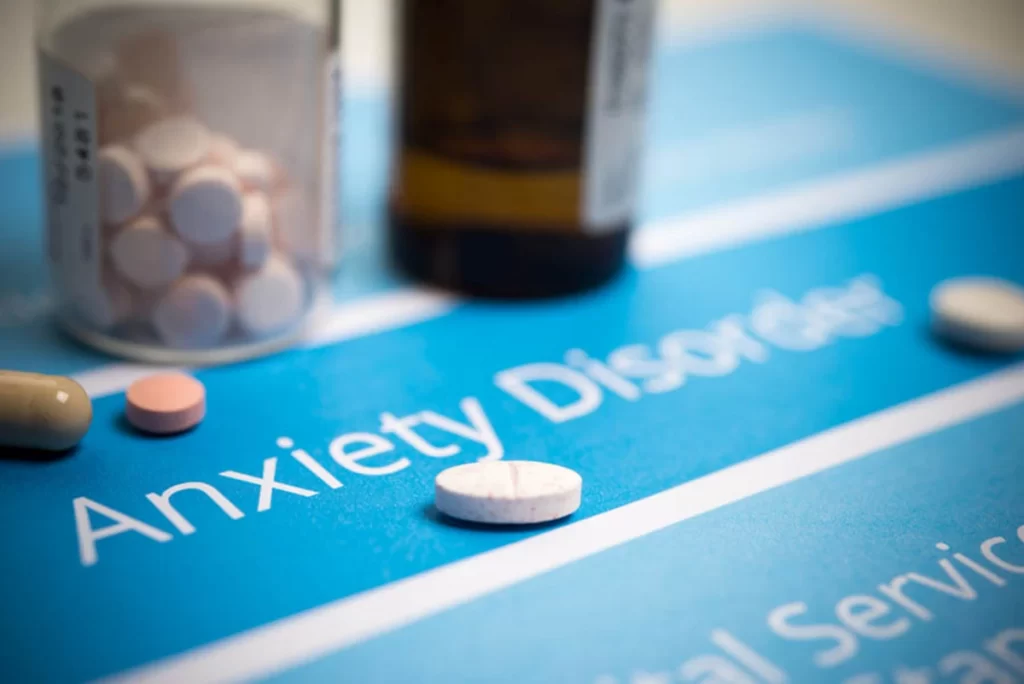
Exploring Non Addictive Anxiety Medication Options
Many people, at times, fear the risk of dependency or the severity of side effects and thus are hesitant about trying medicines. You should also understand that the current generation of psychiatry heavily depends on non addictive anxiety drug categories that give long-term stabilization without the possibility of getting used to the drug or developing a physical dependence.
In contrast to quick-acting tranquilizers that are usually only allowed for short-term or emergency uses because of their potential for causing addiction, non-addictive options work slowly in order to balance the underlying brain chemistry.
First-Line Daily Options
- SSRIs and SNRIs: Selective Serotonin Reuptake Inhibitors and Serotonin Norepinephrine Reuptake Inhibitors are among the most commonly prescribed first-line treatments. Gradually, these drugs increase the production of essential neurotransmitters, thus reducing the general level of stress and emotional vulnerability in the long run.
- Buspirone: This medication is designed to alleviate general worry without sedating or creating dependence. To be effective, it is important to take buspirone regularly every day.
Situational and Target Relief
- Beta-Blockers: Drugs such as propranolol can be quite beneficial in tackling performance or situational stress. They do not interfere with your thoughts, instead, they simply block the physical adrenaline response for a short period, thus controlling your heart rate and preventing physical trembling.
- Antihistamines: Some stronger prescription-level antihistamines could be utilized as an emergency measure to have a mild sedative effect especially on those days when one is feeling extremely drained or stressed out due to high levels of sensory input.
How to Manage Stress of Travel: Anxiety-Pills for Plane
Anxiety about travelling abroad is one of the most typical-situations of distress and it may totally ruin your life-turning points, leisure time or work-purposes. Getting anxiety on planes medication is a search for the product, which fulfills the demand of giving the users, who are very nervous, a relief without hampering the other activities.
For those who fly only once in a while, it probably won’t be necessary to take medications daily. Sometimes doctors even suggest single session treatment:
- Body Adrenaline Control: Beta-blockers are the drugs generally prescribed for a sudden thumping heart, sweaty palms and difficult breathing usually caused by the takeoff of the plane or sudden noises of the airplane. These medicines work by calming the body so that the mind can use the grounding techniques effectively.
- Calming Factors on Demand: Temporarily acting, no-dose dependency can be given to the patients on request during the flight in order to calm them down. Besides, they are not feeling too uncapa-citated or sleepy at the time they are disembarking.
If you inform your doctor about what frustrates you, he or she will be able to help you put a s-af-ety plan in place that will enable you to travel without seeing this as a big problem but as a normal part of life.
Best ADHD Medication for Anxiety
Many people often have symptoms of both attention deficit hyperactivity disorder (ADHD) and chronic worry that overlap. It is crucial to figure out what is the actual source of your frustration if these two disorders are happening at the same time. Untreated executive dysfunction can cause chronic stress and overwhelm, which lead to symptoms of anxiety disorder.
Discovering which medication is the best for anxiety may require you undergoing a clinical evaluation that is quite thorough and very personal. Most commonly, the clinical strategy targets either one of the following main treatment approaches:
- Non-Stimulant ADHD Treatment: Atomoxetine and other such medications gradually and steadily regulate the levels of norepinephrine in your body. They address the inability to focus while also reducing physical tension and internal restlessness in such a way that the person experiences less anxiety.
- Extended-Release Stimulants: These are the formulations of the drugs that are slowly released so that a person gets an even supply of dopamine all day long. The ADHD symptoms of chaotic, racing thoughts get changed by the medication to such an extent that on the contrary the person may feel much calmer and more collected.
Sometimes, a combination approach, one that includes an ADHD medication and a non-addictive option for anxiety, might be the best comprehensive way for a person to experience relief, to be able to focus clearly, and at the same time, to keep stress on the whole system at a level that is manageable.
Extended Anxiety Medication Relief: How to Find the Way
Indeed, complete and long-lasting relief from anxiety medication is quite infrequent when it is only the result of a single prescription. Medication is really an important tool that can bring down the overall level of your symptoms, thus removing your nervous system from a continuous survival state of fight-or-flight. This leads to the creation of an indispensable mental space that allows you to carry out therapeutic healing at a deep level.
A trauma lens indicates that psychological suffering is generally stored in the body and is very much linked to old memories. Genuine comfort comes from mixing clinically prescribed medications with proven techniques, e.g.:
- Cognitive Behavioral Therapy (CBT) to shift the enduring, intrusive thought processes.
- Use of body work and mindfulness methods to aid in the relaxing of pent-up muscular tension.
- Regular, sustained communication with your psychiatric professional to make modifications in the medication and monitor your changes over a period of time.

Securing an Anxiety Medication Refill Safely
After an effective medical plan has been made, it’s crucial to continuously practice the prescribed course of treatment for your health and emotional well-being. Suddenly missing doses or stopping psychiatric meds without a warning can cause uncomfortable withdrawal symptoms or a severe relapse of your original worry.
Getting a timely anxiety medication refill depends on your proactive communication and familiarity with your care team. Since mental health medications change the brain chemistry, professional supervision is necessary to ensure the treatment is safe, effective, and with manageable side effects.
Make sure your treatment is always well maintained by following these tips:
- Plan Ahead: Try to make your refill request at least a week before you will completely run out of your current supply. This allows for the time needed to send information between the doctor’s office and the pharmacy.
- Keep Your Follow-Up Appointments On Time: Medication refills are generally connected to the scheduling of follow-up visits to the office. During these sessions, your physician can confirm that your medication continues to be beneficial and, if needed, can make legal and safe modifications to your treatment plan.
- Inform Your Doctor Right Away If Changes Occur: Whether you deal with a new life event, physical change, or you feel the need to alter your current medication dose, it is best to arrange a talk with your doctor to discuss these matters rather than changing your dose on your own.
Being in control of your mental health journey is a great self-care decision. With expert, professional help and a compassionate, trauma-informed approach, it is absolutely possible to find lasting peace and balance. Here at Open Minds Psychiatry, we pledge to be with you at every stage of your recovery, aiding you in the establishment of a solid, healthy life ahead.
FAQs
Almost all as-needed anxiety drugs (such as beta-blockers or particularly targeted relaxing drugs) start working within 30 to 60 minutes. Generally, their effects last for around 4 to 8 hours, but this may vary with the type of medication and your individual metabolism.
Commonly prescribed options include maintenance medications that are taken daily, such as SSRIs (e.g., sertraline, escitalopram) or SNRIs (e.g., duloxetine) which change the brain’s chemistry slowly over time. There are also non-habit forming daily alternatives like buspirone and situational use drugs like beta-blockers (propranolol) or prescription antihistamines (hydroxyzine) which are very commonly used as well.
The 3-3-3 rule is a handy and easy-to-learn method that helps you calm down quickly when you are under a lot of stress or experiencing a panic attack.
When you apply the 3-3-3 rule, you:
✔️Observe your surroundings, and to yourself, name three things that you can see.
✔️Focus on your hearing and see if you can pinpoint three different sounds that you can hear.
✔️Take a physical self-awareness step by moving three parts of your body.
The symptoms being quite different, the following are five of the most common indications that routine stress is turning into chronic anxiety.
✔️One will find themselves constantly worrying to the point that the thoughts come thick and fast and on top of that, the worrying is disproportionate to the reality.
✔️Physical manifestations of stress such as an uncontrollably rapid heartbeat, muscle pains, or sweating can be present.
✔️Not being able to get to sleep or staying asleep because your mind just won’t stop thinking can be an issue.
✔️Being really tired all of the time or at least feeling that way because of the constant state of inner unease that is going on.
✔️Engaging in avoidant behaviors is one indicator, where you are actively giving a wide berth to places, social settings, or tasks so as not to give in to feeling overwhelmed.