
HIPAA compliant telehealth has been playing an essential role in today’s virtual healthcare as it not only facilitates consultation of patients and their caregivers remotely but also ensures that their health records remain private and secure.
Basically, it is the case that all online platforms, video calls as well as other data transfers must meet stringent federal rules regarding privacy and security. With an increasing number of people opting for telemedicine as a form of everyday care and support with their mental health, it is helpful for the patients to be aware of how these protections function and for clinicians to be seen as trustworthy. Through this article, a breakdown has been made as to what a HIPAA compliant telehealth actually entails, why having a secured online meeting is a must, and how all of these standards specifically relate to virtual psychiatric services.
What Does HIPAA Compliant Telehealth Actually Mean?
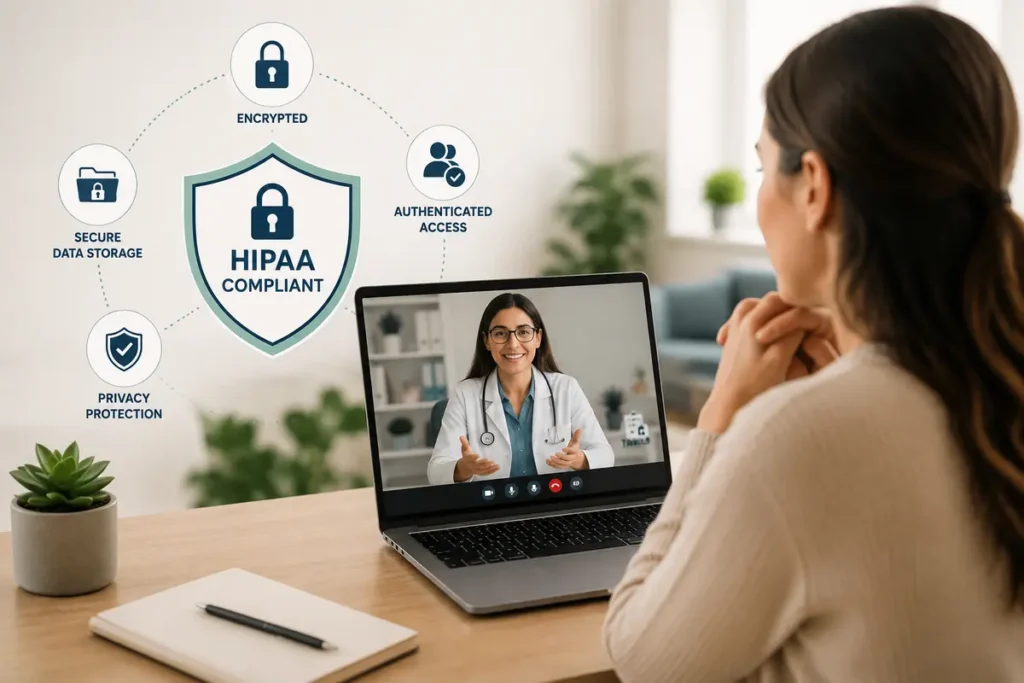
The Health Insurance Portability and Accountability Act, HIPAA, establishes the nation’s standards for guarding health information of individual patients which is considered sensitive. If a telehealth platform claims to be HIPAA compliant, it means that the platform has set in technical、physical and administrative protections and procedures to ensure against unauthorized access to patient data.
To name a few: encrypted messages, strong and well-hidden ways to access platforms, limiting who can see the records, and written agreements with any third-party companies which might have access to the patient data.
Such security means that from the patient’s perspective, the discussion and the documentation arising from the conversation during a virtual visit, will remain private and will not be exposed without the patient’s consent. On the other hand, the providers are also supposed to follow the guidelines set for them, which include the use of software that is permitted, the development of training sessions on staff on the right handling of protected health information, etc.
Why Secure Telehealth Platforms Matter More Than Ever
Virtual care has come in a big way, but only part of the digital tools built for personal video calls are suitable for medical conversations. Consumer video chats do not usually meet the healthcare standards required in terms of encryption, audit tracks and data storage protections. That is why telemedicine platforms designed for the specific requirements of the healthcare sector are a big step ahead of other types of software in terms of meeting the medical privacy and regulation standards.
A good telemedicine app or website would include:
- Crypto safe video and audio calls
- Encrypted, permission-only data storage system for the medical records
- Patient and doctor logon methods that include several checks, like passwords as well fingerprint biometrics
- Every medical consultation gets recorded automatically with logs to ensure traceability
- Legally binding agreements signed with all external technology suppliers that handle the information
These protections help minimize the threat of hackers getting unauthorized data access. Selecting a product that really has such features is much more than just an IT requirement it impacts patient safety levels and regulatory conformity.
The Role of Secure Video Conferencing in Virtual Care
Video conferencing is the most common way patients have telehealth sessions with their providers but it is one of the most challenging at the same time. Compared to regular business meetings, a telehealth video conferencia may include discussions on diagnosis, prescription medication, mental health symptoms, and even personal history. If this connection is not secured, the disclosure can result in exposing sensitive information.
In healthcare, secure video conferencing is mainly accomplished through the use of encryption for data transmission where no outsider can get hold of the conversation. It also curbs any possibility of recording or taking screenshots unless it is explicitly permitted, and the system connects every session with a confirmed patient identity to avoid mix-ups or unauthorized login. If people want to get the most out of their telehealth services, it’s good to know whether the video platform was specifically designed for medical purposes or whether it was merely modified from a common-use application.
HIPAA Compliant Telehealth Psychiatry: A Special Case
Mental health care is an area with added delicacy and sensitivity. Telehealth psychiatry is frequently a medium for very personal disclosures regarding moods, traumas, relationships, and even behavioral changes. Patients must be adequately reassured that such sensitive sessions will be kept confidential not just legally, but emotionally as well.
A HIPAA compliant telehealth psychiatry service means that confidential data such as session notes, prescription details, and diagnostic reports are kept and accessed only by the designated staff member. This is very necessary for patients having conditions which may still be seen as a stigma in society so, in case of a data leak, the patient is likely to encounter both personal and professional consequences.
Being compliant is not merely a requirement to be ticked off; it is an integral part of providing the necessary safe and therapeutic atmosphere where patients are willingly honest and open about themselves to their counselors.
How Patients Can Evaluate a Telehealth Provider
When patients consider virtual care, it is quite natural that they come up with some straightforward questions:
- Is the platform using encrypted video and messaging?
- Where are the patient’s records kept, and who is allowed to see them?
- Do the team members get an educational on privacy, security-related processes?
- Certainly, what is to be made of recorded sessions in case recordings are made?
- Is there a privacy statement clearly published online?
If an organization shows honesty, they will most likely provide clear answers to all those questions, which also reveals the standards they uphold.
Choosing Care You Can Trust
Virtual mental healthcare needs to be just as discreet, personal and professional as in-person visit. If you are looking for a doctor who cares about both the clinical quality of the services provided and keeping the patient’s data confidential, Open Minds Psychiatry offers telehealth psychiatry services that are patient-centered and utilize the latest, HIPAA-compliant technology that is also secure.
Speak to Open Minds Psychiatry to book a consultation and discover mental health care that was conceived to be fully private.
Frequently Asked Questions
Telehealth is as secure as in-person visits if HIPAA compliant. Enciphered video transmission and safe records storage, combined with controlled access provide an equal level of protection as an in-office visit.
To record the telehealth session one needs to inform and get the client’s complete consent. Furthermore any existing recordings have to be both encrypted and access-controlled following HIPAA regulations.
Non-HIPAA compliant platforms are in danger of exposing patients’ confidential data and as such can lead to privacy breaches, civil penalties, and deterioration of patient-provider trust levels.
It is generally accepted in the scientific community that, for most disorders, virtual psychiatric care is just an equal method as long as sessions are private, they happen regularly, and they are carried out through a secured platform.
Speak up about encryption standards and data storage practices to your provider, or find details on a provider’s privacy policy and read about their technology.