
Stomachaches and meltdowns, these are how an anxious child often shows their worry. Clinginess is another way, or a sudden refusal to go to school. Catching these signals early really helps. You can step in before the anxiety takes hold. So what about the reasons behind it? This article goes into why children get anxious. It covers warning signs for each age group. There are practical steps for parents to use at home. And we look at when it might be time to bring in a professional.
Understanding Anxiety in Children
All kids can get anxious, sometimes even at a new school, a test, or a social event. But it is a normal emotion most of the time which disappears when the challenging situation is gone. An anxious child is not like other kids with a problem. An anxious child is continuously bothered, and the problem gradually gets worse till it starts affecting school, friendships, sleep or family life. If your child is a worrier, s/he might not say it directly but rather give signs of it. Anxiety is likely to manifest in a stomachache or a temper tantrum, or the child might make up excuses to avoid doing something s/he used to enjoy.
Signs of Raising an Anxious Child
It is easy for parents to either overlook the signs of anxiety, or mistake it for some other reason like the child being a phase-baby, or being a naughty one, as anxiety changes with age in every child.
- Frequent stomachaches or headaches with no medical reason
- Difficulties with sleeping, getting or staying asleep and also frequent nightmares
- Making parents clingy or feeling fear of separation even more than before
- Recurrent reassurance-seeking or asking what if questions many times
- Showing irritation, meltdowns, or having difficulty to focus
- Refusing to be in social situations, at sleepovers or to try new things
- Being so focused on doing well that even a minor mistake can feel catastrophic
Pretend that a younger child’s way of showing anxiety is mostly physical, in the form of tears, clinging, or tummy aches, while older kids and teens are more likely to entirely evade the situation, become irritably or socially withdrawn.
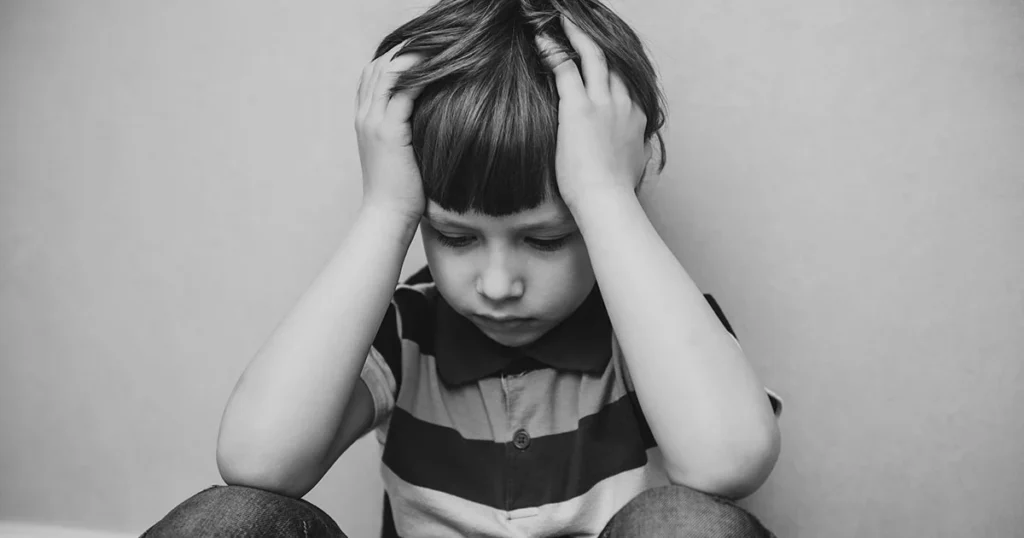
Child Anxious About School: A Closer Look
Parenting experts often mention that parents are mainly concerned that the school is the cause of their child’s anxiety. It is quite common to see that at morning school drop-ins children get upset by crying or refusing to get out of the car and other similar things. Anxiety about going to school can be due to peer pressure, worry about getting bad grades, fear of separation, and past experiences such as being bullied. Without a doubt, if the problem is not dealt with at the first stage it may result in children refusing school altogether which in turn affects their presence at school as well as their performance academically. Establishing a loving regular schedule and having frequent talks about the specific source of fear plus a teacher collaboration can significantly ease this difficult period for a student.
Practical Ways to Help an Anxious Child
- Recognise and validate the child’s worry but don’t dismiss it. Telling the child there’s nothing to worry about might make the child feel that their problem is trivial. Alternatively, validate the emotion: “I can see this feels scary for you.”
- Help a child give a name to the fear. It diminishes the fear’s intensity when one can talk about fears, making the fear easier to handle.
- Display a composed behaviour. Kids get stress from parents and if parents stay calm during situations when a child is feeling worried, it helps their child as well by controlling the child’s stress system.
- Establish routines that are predictable. Keeping bedtime, having dinner, etc. the same way reduces uncertainties which is one of the main sources of anxiety in children.
- Avoiding the fear totally will never help; gradually facing the feared situation is what builds a child’s confidence.
- Introduce very basic coping mechanisms. Kids can be given a task to distract themselves when worry is at its peak which could be a deep breathing, counting game, or grounding practice。
- Try to break the cycles of reassurance. When the same worried question is repeated, it unintentionally strengthens anxiety and the child is given the message by the repeated answers that they should not let go of their fear, on the other hand, a child will be taught to accept uncertainty with small steps of exposure.
When to Seek Professional Help
Seeking a mental health professional rather than waiting for the problem to pass is the best idea when school attendance, friendships, sleep, and family routines have been interrupted due to anxiety for several weeks. Finding a child anxiety therapist near me may be a perfectly reasonable initial step especially for parents whose home tactics just aren’t enough. A licensed child psychologist can determine accurately whether a child’s anxiety has developed into a diagnosable disorder and is one that can be cured such as a child going through cognitive behavioral therapy (CBT), a child therapy which is researched and proven to be very effective for children who display anxiety disorder symptoms, to name one.
Sacramento families who are looking for child anxiety support could be referred to several sources: school counselors or even private therapists that provide child-focused therapy. However, regardless of the option one chooses, what the family should concentrate on more than anything else is getting a provider who has the experience with anxiety in the pediatric age group because methods which are effective for adults have to be modified quite a bit for children’s level of understanding.
If you’re in the Sacramento area and wish to find an effective child psychologist who treats anxiety, consider Open Minds Psychiatry. The team at Open Minds Psychiatry not only provide supportive assessments and therapies based on proven clinical evidence aimed at children and teenagers but also offer very caring help from the beginning. Call now to arrange a consultation and ensure your child gets the help needed immediately.

Final Thoughts
The only first step if you want to help a child dealing with anxiety is knowing that anxiety is not the same as bad behavior. In fact, it’s the child’s way of expressing that he/she is feeling either not safe or overwhelmed. Through the support of a child psychologist, most anxious kids can learn how to handle their fears and become mentally and emotionally strong.
FAQs
Start by validating their feelings instead of dismissing them, keep routines predictable, teach simple calming techniques like deep breathing, and gradually encourage them to face feared situations in small steps. If anxiety persists or worsens, a licensed child therapist can provide structured, evidence-based treatment such as CBT.
It’s a quick grounding technique: the child names 3 things they can see, 3 sounds they can hear, and moves 3 parts of their body (like fingers, toes, or shoulders). It helps shift focus away from anxious thoughts and back into the present moment.
Anxiety can appear at almost any age, including toddlerhood, but it commonly becomes more noticeable between ages 6 and 12 as social and academic pressures increase, and again during the teenage years.