The lives of many high-performing adults in their 20s and 30s are marked by rapid changes, almost like they are experiencing multiple lifetimes within a single lifetime. Sooner or later, the usual work or personal stress may start to feel like an uncontrollable roller coaster of emotional highs and lows. When that happens, it’s probably a good idea to take a closer look. Nowadays, having a bipolar disorder specialist telehealth visit is not just a matter of convenience. It is a carefully thought-out move to get the very best mental health care from a specialist, in an environment where you feel the most at ease.
Is Bipolar a Mental Illness?
It is very important to get to the most basic of questions: is bipolar a mental illness? The answer is yes, it is a long-lasting medical condition of the brain. It is not a personality defect, or a transient reaction to stress.
Bipolar disorder is a medical condition that causes people to experience very different moods, energy levels, and activity levels. Usually, people don’t only have good days and bad days but rather, distinguishable and separate clinical manifestations (episodes of mania or hypomania or episodes of depression) that, if not treated, can make it very difficult for you to function. The first step towards getting rid of self-blame and handling the condition effectively is acknowledging it as a real illness.
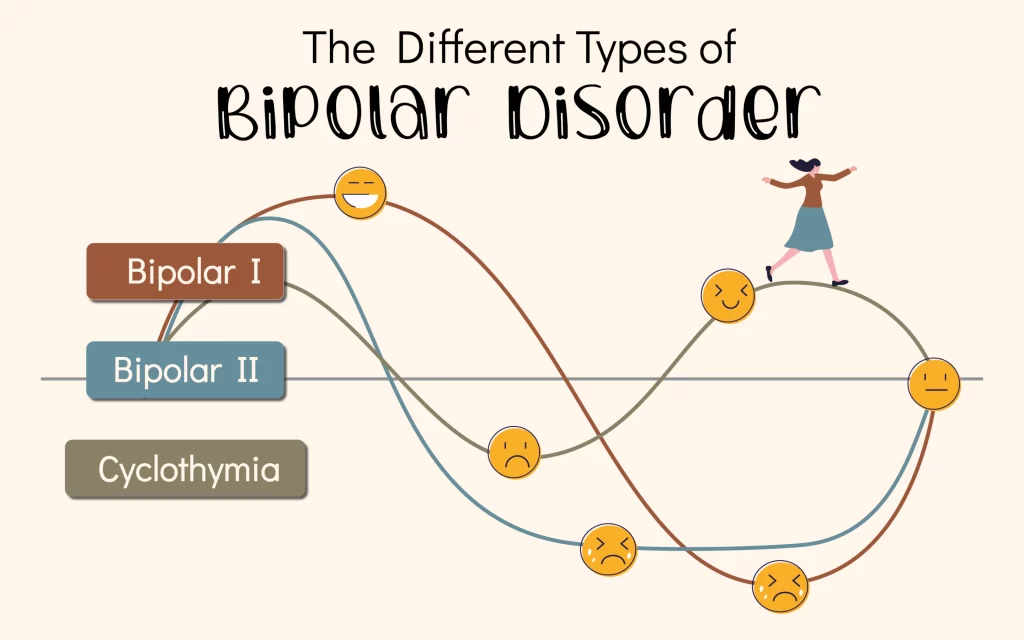
Understanding the Bipolar Spectrum
Bipolar disorder is not just one diagnosis; it’s a range of different experiences. Even though they all have some things in common, the “type” of bipolar disorder you have determines your treatment.
Bipolar 1 Disorder
It is the most popular one. You can have manic episodes that last at least seven days or be so intense that you need an immediate hospital stay. In these times, the person may feel “on top of the world, ” stop sleeping, and do things that are very risky without realizing what the consequences will be.
What Is Bipolar 2 Disorder?
Bipolar 2 disorder is often misunderstood, so what exactly is it? It is characterized by a pattern of depressive and hypomanic episodes. Hypomania is a less severe form of mania; one might feel very energetic, productive, or social. Since hypomania doesn’t usually cause the kind of turmoil that full mania does, Bipolar 2 is often incorrectly diagnosed as just depression. But the “lows” in Bipolar 2 can be as severe as in any other type.
Cyclothymic Disorder
In a way, it is a long-lasting but less severe type of disorder in the spectrum. Persons with cyclothymia undergo changes in mood by showing a mix of hypomanic and depressive symptoms for a period of two years. The mood swings are not severe enough to be considered full episodes.
Decoding the Symptoms of Bipolar Mood Disorder
Bipolar disorder symptoms are complex and varied. During the “high” periods, you may find that your thoughts are racing, your speech is pressured (talking very fast), and your need for sleep is reduced. On the “low” days, you could suffer from deep tiredness, have a hard time focusing, and become uninterested in your usual pleasures. For young professionals, these symptoms sometimes manifest as “flashes” of exceptional work followed by a lot of time being drained without knowing the reason.
The Science of the “Why”
It is only natural to ask what triggers bipolar disorder. Although we have no single explanation, it is widely agreed to be a “perfect storm” of:
- Biological Chemistry: Changes in neurotransmitters that control brain areas associated with reward and stress.
- Genetic Markers: Inherited characteristics that increase susceptibility.
- Circadian Disruptions: Alterations in the sleep-wake cycle that provoke a mood episode, especially during the challenging years of early adulthood.

THE DIAGNOSTIC PATHWAY
Your natural question may be how bipolar disorder is diagnosed if you have been looking for answers. In fact, diagnosis is actually an exclusion, recognition of patterns. For instance, a psychiatrist will check your mood history, sleep rhythms, and heredity background. As symptoms overlap with ADHD or major depression, you should definitely get a mood disorder specialist who will help you recognize these symptoms. They apply the DSM-5 guidelines to make sure that the therapy will address the particular mood disorder that you are going through.
Adopting Contemporary Care
Geography must not be a factor when it comes to the quality of your psychiatric treatment. With a bipolar disorder specialist telehealth session, you get a level of regularity that face-to-face visits hardly ever offer. Without the need to leave your home, you will have a chance to talk to a specialist who is well-versed in the latest protocols for mood stabilizers and therapeutic methods.
Since 2021, when we started at Open Minds Psychiatry, we have devoted ourselves to combining expert clinical work and today’s way of getting help. For us, a diagnosis is not a barrier but rather a guide. Our deep understanding of bipolar spectrum intricacies lets us assist you in creating a life that is well-regulated, foreseeable, and entirely yours.
The Way Forward
Living with a mood disorder is more like running a marathon than a sprint. Once you are properly diagnosed and have a strong support system the ups and downs of mood can be less of a struggle, and the “baseline”, where you feel most like yourself, will become your new normal. Contact us today and start your path to a better and more stable you.

FAQs
Indeed. Studies have shown that telehealth sessions are equally effective as face-to-face sessions for recognition of mental health conditions and medication management. Besides, telemedicine will offer the patients privacy and a very comfortable and easy way to receive regular mental health without having the stress of travelling.
Bipolar 1 is defined by the presence of full blown mania that is so severe that it requires hospitalization. Bipolar 2 on the other hand is characterized by the presence of hypomanic moods, which is a much milder “high” during which the individual is aware of himself and his new found productivity, but a bit later, the individual experiences a prolonged and very low depressive state.
Symptoms depend on the type of episode. Mania or hypomania may be associated with racing thoughts, less need for sleep, and excessive impulsivity. In contrast, depression typically features a sense of extreme tiredness, disinterest, and inability to focus.
Bipolar disorder is diagnosed based on clinical examination and detailed history including family history. Due to the fact that symptoms of bipolar disorder overlap with other mental disorders, specialists do the diagnosis on the basis of finding the unique recurrent mood episodes that are typical of the disorder.
As a matter of fact, Bipolar disorder is one of the chronic diseases that will almost certainly require continuous treatment for life. It is well known that therapy as well as changes in lifestyle are very important components, yet the use of medication is highly recognized as the basis for achieving brain chemical balancing and avoiding extreme mood swings.