
Trauma leaves people with quite different reactions. Some of them start to feel their normal selves within a few weeks, whereas others have difficulties for years. That is why it’s very important to understand the difference between acute stress disorder vs PTSD. Although these two psychological disorders present with some quite similar symptoms, they differ as to when they occur, how long they last and their impact on the persons over time.
In this article, the two disorders are put to a comparison. The treatment options, effects of trauma in teens as well as in children, adoption-issues-trauma etc. are also discussed here in general language.
The definition of acute stress disorder
Acute stress disorder or ASD develops right after someone has been through a very traumatic event. A few days after such trauma, people may start showing ASD symptoms.
The symptoms can be flashbacks, feeling very anxious, being unable to get to sleep. Sometimes, people with ASD just cannot express any feelings, or they don’t get involved in daily life anymore, they feel like the world goes on without them.
Ordinarily, the period of symptoms of ASD is about three days to one month but, if the symptoms still persist after this period, a physician may diagnose the condition with another name.
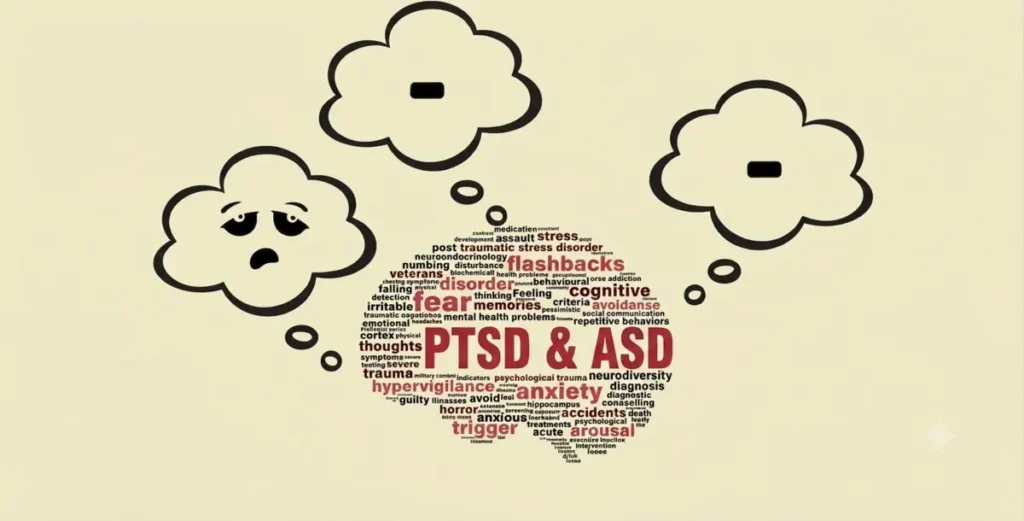
What is PTSD?
Post traumatic stress disorder, or PTSD is somewhat different from acute stress disorder in the time the symptoms appear but otherwise both conditions are the same with regard to the type of symptoms one suffers from.
The symptoms of PTSD must show up at least after one month to diagnose PTSD. In addition, PTSD may cause people to live through trauma again, they are able to experience the whole thing in their minds while it was happening and also sleep can be a very painful experience, for example nightmares. PTSD also has severe emotional impact, daily life is greatly compromised by this and people can find it hard to work and get on with others. If the person with PTSD does nothing about the symptoms their mental state deteriorates further.
Acute Stress Disorder vs PTSD: Key Differences
The primary distinction between acute stress disorder and post-traumatic stress disorder (PTSD) is the length of symptoms. As its name suggests, acute stress disorder is relatively brief.
Post-Traumatic Stress Disorder, on the contrary, is a chronic condition. Additionally, one more variation relates to the time of diagnosis. Only when symptoms persist for a minimum of one month can PTSD be diagnosed, according to medical guidelines.
It is also worth noting that individuals who initially have acute stress disorder do not necessarily proceed to PTSD. The likelihood of such a progression is significantly lowered when early interventions are put in place. Therefore, swift medical attention plays a critical role in minimizing the risk of PTSD development.
Post Traumatic Stress PTSD Treatment Options
In a typical setting, one can effectively treat post traumatic stress PTSD by combining therapy and other forms of support. The different methods that one is likely to encounter include:
- Cognitive Behavioral Therapy (CBT): It enables the patient to alter their thought processes so they will no longer have negative thoughts that haunt them.
- Exposure Therapy: It involves getting the patient used to the trauma triggers in little doses until the trauma no longer affects the patient emotionally or physiologically.
- Medication: These drugs may include antidepressants which could help control the emotional symptoms and reduce anxiety.
- Support Groups: Joining a group will help the participant not feel like the only person with the problem.
A doctor or therapist will recommend a course of treatment customized to an individual. A doctor or therapist would make such a decision that is specific and relevant for the condition of that one individual. It is quite obvious from this fact that the ways in which trauma affects people vary.

What Is a Symptom of Secondary Traumatic Stress and PTSD?
Secondary traumatic stress impacts those who see others go through traumatic experiences. A few examples of such people are those who offer professional support, emergency workers, and close relatives. One of the features that both secondary traumatic stress and PTSD commonly share is a state of emotional fatigue. In addition, a few other indicators have been identified, which include increased frustration levels, trouble getting enough sleep, and one of the most significant ones being a gradual decrease in the degree of empathetic behavior.
If the signs are spotted early enough, burnout can be avoided and the potential for severe mental damage minimized.
Trauma Disorders and PTSD in Teens
Since adolescents‘ mental makeup differs from adults’. Trauma and PTSD can affect a teenager by making the person moody, withdrawn, or getting into trouble at school through a drop in performance or even a total withdrawal. Some teenagers take rebellious routes, while others shut down emotionally and avoidant.
Parents and teachers can spot the signs of the problem in case of sudden dramatic changes in the child’s or student’s behavior. Catching on to problems early on will help young humans get through them more easily in the future.
PTSD From Childhood Trauma
Those who suffered childhood trauma and then developed PTSD still carry the emotional scars with themselves to the point of getting affected by it into adulthood.
Such trauma affects the brain’s reaction to stressful situations which can result in problems, e.g., mistrust in others, a fear attack or even a mental imbalance, much later in life.
To overcome is not impossible even at an old age. Therapy helps a lot in safely re-experiencing and understanding the past traumas in a way that the emotions are not overwhelming.

Adoption Trauma with Complex PTSD
Adoption can be delightful, but not without its hidden trauma. Adoption trauma with Complex PTSD might be a result of early separation, multiple placements, or unresolved grief. Adoptees might have issues with the formation of identity, attachment, or fear of abandonment.
A child or an adult can be helped in healing by having access to specialized therapy that understands adoption-related trauma.
A Guide to When to Get Help from the Experts
If it’s trauma symptoms that are hampering one’s normal life, a psychologist or a psychiatrist is a good bet to find relief. Knowing the difference between acute stress disorder and PTSD allows the concerned person/family to seek timely help. For compassionate, custom-made mental healthcare services, families and individuals affected by trauma-related challenges turn to Open Minds Psychiatry. Call us to learn how we support your healing process through next steps.
Frequently Asked Questions
No. The reason is that ASD and PTSD diagnoses are based on how long the symptoms last. Therefore, an individual either receives a diagnosis of one condition or the other they cannot be diagnosed with both at the same time.
No. It is quite common for people to fully recover from ASD. If one is treated promptly, it can be the reason that one does not develop PTSD.
Timely treatment of a condition starts with a correct diagnosis. Hence if the diagnosis was done early, the chance of developing symptoms which lead to PTSD could be minimized.